In industrial automation control systems, regulating valves play a crucial role as actuators, and their performance directly affects the accuracy and stability of the control system. However, the flow characteristics of most regulating valves have obvious non-linear features, which can lead to inconsistent responses of the control system, degradation of regulation quality, and even affect the stability of the entire system. Therefore, linearizing the regulating valve is an important means to improve control accuracy and system performance.
The Sources of Non-linearity in Regulating Valves
The non-linearity of regulating valves mainly originates from their inherent flow characteristics. Common flow characteristics of regulating valves include quick opening, linear, and equal percentage. Among them, only the linear characteristic is theoretically linear, but in reality, due to factors such as manufacturing technology and fluid dynamic effects, it also shows certain non-linearity. The equal percentage characteristic is a typical exponential non-linear relationship, with the gain increasing with the opening, high sensitivity at low openings, and low sensitivity at high openings, which poses a challenge to the design of control systems.
2. The significance of linearization
The core goal of linearization processing is to present an approximate linear relationship between the flow of the control valve and the valve core opening, thereby simplifying controller design and improving the dynamic response and steady-state accuracy of the control system. After linearization, the controller can adopt a simpler PID control strategy, avoiding issues such as overshoot and oscillation caused by non-linearity.
3. Methods of linearization
1. Selecting appropriate valve core structure or flow characteristics
In the design phase, control valves with linear characteristics can be selected according to process requirements, or the flow characteristics can be changed by replacing the valve core. For example, replacing an equal percentage valve
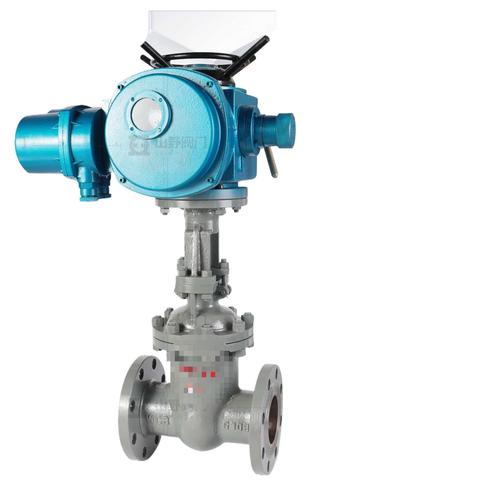
core with a linear valve core to meet linear control requirements.
2. Software compensation method (digital pre-distortion)
In modern control systems (such as PLC, DCS), the opening signal of the valve can be pre-processed through software programming. According to the actual flow characteristic curve of the valve, an inverse function mapping table is established to perform non-linear transformation on the control output signal, making the actual output flow linearly related to the control signal.
3. Using locators for intelligent compensation
Intelligent valve locators have non-linear correction functions that can automatically adjust the valve opening based on actual flow characteristics. Through configuration or learning functions, the locator can compensate for the non-linear characteristics of the valve to achieve more precise flow control.
4. Piecewise linearization
For control valves with complex non-linear characteristics, the method of piecewise linear approximation can be adopted, dividing the entire opening range into multiple intervals, and using a linear model to approximate the true characteristics within each interval, thereby reducing the overall non-linear error.
4. Matters to be aware of in engineering applications
In actual engineering applications, the following points should be noted when implementing linearization measures:
- Accurately obtain the valve characteristic curve: The effect of linearization depends on the accuracy of the original non-linear data, and real data should be obtained by conducting flow tests on the valve.
- Consider system dynamic changes: The working conditions of valves may change over time or under different operating conditions, and the linearization strategy should have certain adaptability.
- Combined with control algorithm optimization: Linearization is not omnipotent; it also requires the integration of controller parameter tuning and system identification to achieve overall performance optimization.
Conclusion
With the continuous improvement of industrial automation levels, the non-linear problems of control valves have received increasing attention.
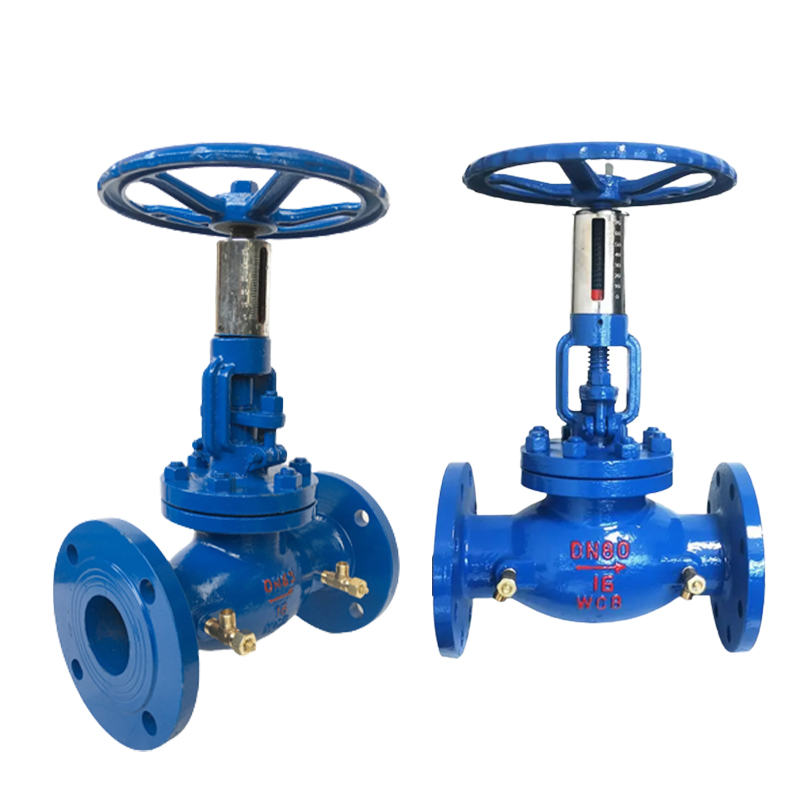
By reasonably selecting valve types, utilizing software compensation, and intelligent locators, it is possible to effectively realize the linearization of control valves, thereby enhancing the control accuracy and stability of the system. In the future, with the development of artificial intelligence and adaptive control technology, the intelligent linearization of control valves will become an important development direction.